


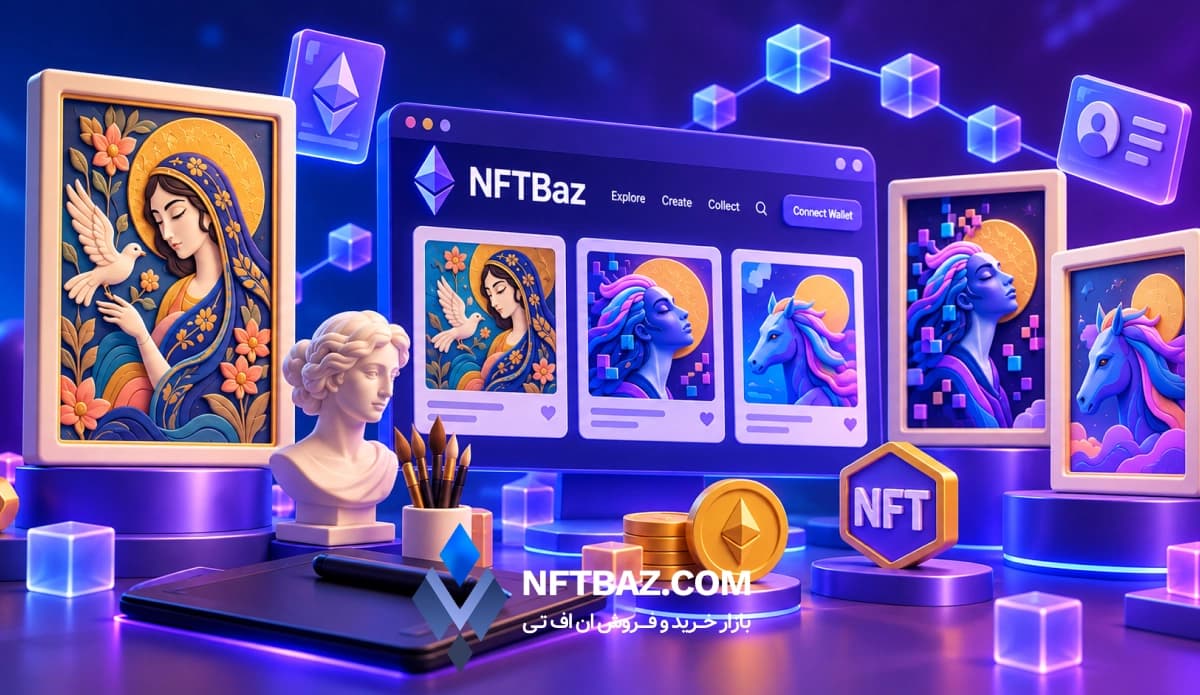
A Persian miniature can tell an entire story through intricate details, vivid colors, and carefully arranged figures. Today, Iranian NFT artists are exploring that visual heritage alongside surreal portraits, experimental illustrations, and futuristic digital worlds. Their work challenges the idea that Persian art must always look traditional, revealing a creative scene shaped by both cultural identity and individual imagination. Yet for international collectors, discovering these artists and finding their original collections can be surprisingly difficult. This guide introduces Iranian NFT artists, examines the distinctive styles and stories behind their work, and explores how Persian artistic traditions are finding new expression on the blockchain. It also shows where collectors can discover their artworks across NFT marketplaces.
From traditional painting to pixels and animation
Anyone searching for Iranian NFT artists quickly runs into a problem: the scene is real, active, and visually diverse, but the information is scattered. Some artists built visibility through international crypto-art communities. Others are easier to discover through platforms such as NFTBaz, which describes itself as a marketplace for Iranian digital art, supports Ethereum and Polygon, and lets users browse Iranian artists alongside global collections. Its homepage also makes clear that the platform shows both NFTBaz-native activity and a broader “NFTBaz + OpenSea” global marketplace layer, which matters when you are trying to understand whether an artist is minting directly on NFTBaz or being surfaced there through wider marketplace data.
Naime Pakniyat — Persian Miniature Logic, Rebuilt in Pixel Art
If one artist clearly demonstrates how Persian visual heritage can be translated into blockchain-native art, it is Naime Pakniyat. In her own words, she is a “pixel artist and storyteller,” and she explains that her work blends Persian miniature aesthetics with pixel art to connect cultural heritage with contemporary digital expression. That single idea is important for this article because it moves the discussion beyond cliché. Iranian NFT art is not “traditional art uploaded to the blockchain.” In Pakniyat’s case, it becomes a thoughtful redesign of Persian image-making inside the language of pixels, looping animation, and internet culture.
Her background also gives the work more weight than a simple marketplace profile would. Pakniyat says her short animation Gambit was showcased and awarded in roughly 50 international festivals, and that after entering the NFT space in 2021, she built 300+ collectors and recorded 50+ ETH in sales. She also notes that her pieces have been exhibited in events such as NFT NYC, Art Dubai, and Cryptoart V8.0 in Paris. For a collector, that combination matters: a recognizable artistic thesis, a cross-medium practice, and proof that the work has already circulated in both festival and web3 contexts.
What makes Pakniyat especially valuable in a guide like this is that she gives the reader a clean answer to a bigger question: how does Persian art actually enter the NFT space? In her case, it happens through structure and atmosphere rather than surface decoration alone. The reference to Persian miniature is not just ornamental. It informs storytelling, rhythm, and visual density, while pixel art makes the result legible to digital-native audiences. That makes her one of the strongest examples of an Iranian artist whose work can speak to both cultural researchers and international NFT collectors.
Aref Niazi — A Painterly Iranian Voice in the Wider Digital Art Conversation
Aref Niazi is primarily documented as a painter and portraitist rather than an NFT-native creator. His work is still relevant to a broader discussion of Iranian digital collecting because it demonstrates how an established visual language can potentially move across traditional and digital art environments.
In his artist statement, Niazi emphasizes texture, form, and the communication of emotion through painting. That focus places the artwork itself — rather than a specific marketplace or digital format — at the center of his practice.
For collectors researching contemporary Iranian art beyond NFT-native creators, artists such as Niazi can provide useful context for understanding how established studio practices may intersect with new forms of digital exhibition and ownership. However, any NFT-related work should be verified through the artist's official channels before being presented as part of his documented practice.
Arezoo Sarvarpour — Concept-Driven Work with an Introspective Vocabulary
Among artists currently visible on NFTBaz, Arezoo Sarvarpour stands out because her profile shows a relatively fuller body of work. Her artist page lists 9 works and a set of titles that immediately suggest an introspective, concept-driven approach: Intuition, Knowledge, Listening, Talk, and Power. All are shown on Polygon, which also makes her profile easy to place within the technical side of the marketplace.
Those titles matter more than they may seem at first glance. They give the collection a semantic pattern. Rather than selling only images, Sarvarpour appears to be building a small conceptual world around perception, communication, and inner force. For readers of the article, that is useful because it shows another branch of Iranian NFT practice: not explicitly historical, not obviously ornamental, but still idea-led and personal. In a market crowded with generic digital collectibles, that kind of coherence is often what makes an emerging artist memorable.
Fariba Saddadi — A Quiet, Meditative Presence on NFTBaz
Fariba Saddadi presents herself with a simple but revealing phrase: “art as a meditation.” Her NFTBaz profile lists 3 works and 3 collections, and the repeated use of Raharamart as the visible work title suggests a self-contained, signature-oriented approach rather than an aggressively segmented commercial release structure.
That kind of profile may not look flashy, but it contributes something important to the article. It reminds the reader that Iranian NFT art is not a single aesthetic movement. Some artists enter the space with large conceptual claims, some with strong cultural fusion, and some with a quieter, more introspective identity. Saddadi’s page signals a practice built around contemplation and personal tone. For a collector, that may be the start of a deeper question: not “Which artist is loudest?” but which artistic temperament feels the most coherent and durable?
Faranak Saddadi — Illustration, Design, and a Flexible Digital Practice
Faranak Saddadi describes her practice in direct terms: she loves drawing, painting, illustration and designing. Her NFTBaz page shows 2 works, 4 collections, and a work titled myartsworld01 on Polygon. That short profile description is actually useful because it positions her as a creator with a multidisciplinary visual foundation, not someone working inside a narrow NFT-only format.
For the article, Faranak helps show how emerging Iranian creators often arrive in web3 from hybrid creative backgrounds. They may not separate “fine art,” “illustration,” and “design” in the rigid way that older art categories sometimes do. That flexibility is common in digital culture, and it can translate well into NFTs, where the boundary between artwork, collectible, edition, and branded visual identity is often fluid. Her presence therefore adds another useful layer to the map of Iranian NFT artists: the illustrator-designer who treats blockchain less as a gimmick and more as another publishing surface for visual work.
Babak Akrami — Ancient Heritage Meets a Cybernetic Future
If the reader wants a clearer example of world-building on NFTBaz, Babak Akrami is one of the strongest names to include. His profile lists 2 works and 1 collection, while the associated Cyber Souls — Genesis Collection offers a much more detailed artistic framing. According to the collection page, it is a digital art series where “the wisdom of history meets the imagination of a cybernetic future.” It describes each Genesis Soul as a visionary mind — a creator, scientist, or thinker — and says the project fuses ancient heritage, science, art, mythology, and futuristic technology into a new digital universe.
This is exactly the kind of artist statement that makes sense inside a collector’s guide. Akrami is not just listing isolated images; he is proposing a mythology. That makes the work legible to readers who are interested in narrative-led collecting rather than single-image browsing. It also shows one of the most promising directions for Iranian NFT art: using historical and civilizational memory not as nostalgia, but as raw material for speculative digital storytelling. In a field where many collections feel interchangeable, that kind of framing can make a project easier to remember and easier to cite when art writers, bloggers, or curators look for examples of Persian-inflected digital imagination.
What ties these names together is not a single visual style. It is the fact that they reveal multiple entry points into Iranian NFT art: cultural fusion in Naime Pakniyat, painterly identity in Aref Niazi, conceptual and meditative work in Arezoo Sarvarpour and Fariba Saddadi, hybrid illustration practice in Faranak Saddadi, and narrative world-building in Babak Akrami. That diversity is exactly why the topic deserves a serious article. Anyone who treats “Iranian NFT artists” as one uniform category will miss the most interesting part of the scene.
From Persian Miniatures to Digital Worlds: The Visual Language of Iranian NFTs
A single Persian miniature can contain an entire world: elaborate architecture, richly patterned clothing, imaginary landscapes, and characters whose smallest gestures contribute to a larger story. These artistic traditions offer contemporary Iranian NFT artists more than decorative inspiration. They provide a visual language that can be reinterpreted through pixel art, animation, digital illustration, and other experimental media.
The Colors, Characters and Stories of Persian Miniature Painting
Persian miniature painting, also known as Iranian negargari, developed a distinctive approach to visual storytelling. Rather than relying exclusively on realistic perspective, miniature painters arranged figures, buildings, gardens, and landscapes to guide the viewer through a scene.
Illustrated manuscripts such as the Shahnameh and Nizami's Khamsa demonstrate how painting and literature worked together. Vivid colors, intricate patterns, imaginative landscapes, and carefully positioned characters brought stories of love, mythology, royal life, and heroic adventure onto the page.
For contemporary digital artists, these techniques present creative possibilities. An architectural composition can inspire a virtual environment, while the layered landscapes of a miniature can become the foundation for an animated scene. Even the smallest decorative elements can be reconstructed as digital patterns without reproducing an entire historical painting.
The connection to Persian art lies not only in recognizable motifs but also in the way images communicate stories. This distinction is important when examining Iranian NFT collections, since cultural influence can appear through composition and narrative rather than traditional imagery alone.
Reimagining Persian Heritage Through Digital Art
One example of this transformation is Iranian artist Naime Pakniyat, whose work combines Persian miniature aesthetics with pixel art. Her animated short Gambit uses a pixelated visual style to tell the story of a peaceful village disrupted by an unexpected death. As the characters become increasingly cruel, the pixels grow coarser, turning the image itself into part of the narrative. Pakniyat describes her practice as connecting Persian artistic heritage with contemporary digital expression.
Her approach illustrates how a traditional visual language can evolve without losing its cultural identity. Instead of copying historical paintings, an artist can reinterpret their compositions, storytelling techniques, and decorative details through entirely different technology.
Blockchain introduces another dimension by allowing artists to issue NFTs associated with their digital works. A piece inspired by Persian miniatures can circulate among international collectors while retaining a verifiable record of its token's creation and ownership.
However, not every Iranian NFT needs traditional Persian imagery to represent Iranian creativity. Cultural heritage can inspire an artist without defining their entire practice. The variety of approaches, from historical reinterpretation to contemporary experimentation, is part of what makes Iranian digital art worth exploring.
From Iran to the World: How Iranian Digital Art Reaches Global Audiences
Iranian digital artists no longer depend on a single marketplace or exhibition space to reach international audiences. Digital exhibitions, artist websites, online galleries, and NFT platforms can all contribute to how an artist is discovered, documented, and followed by collectors outside Iran.
For collectors, this wider visibility creates more opportunities to encounter Iranian digital art, but it also makes verification more important. An exhibition appearance can help establish an artist's public history, while marketplace and blockchain records provide different information about individual digital assets.
From Digital Screens to International Art Exhibitions
Digital art exhibitions have created another route for Iranian artists to present their work alongside creators from different countries and artistic backgrounds.
Naime Pakniyat provides one example. Her work has been connected with international digital-art events including Art Dubai Digital 2023 and NFT NYC 2023. Appearances such as these can help collectors place an artist within a wider creative context rather than judging a work only by its marketplace listing. Exhibition history, however, should not be confused with NFT verification. Participation in an international event can demonstrate artistic exposure, but it does not confirm that every token using an artist's name or imagery is authentic.
How International Collectors Discover Iranian Digital Art
Finding Iranian NFT artists often requires looking across several sources rather than relying on one marketplace. Personal websites, official social profiles, exhibition archives, artist pages, and blockchain records can each provide a different part of the picture.
Exhibition archives may help establish where an artist's work has appeared and which galleries, curators, or events were involved. Official artist profiles can provide information about collections and creative background, while blockchain records can help verify individual tokens.
Using these sources together makes it easier to distinguish an artist's broader career from the ownership history of a specific NFT. For collectors, that distinction is important: artistic exposure provides context, while blockchain data helps establish the identity and transaction history of the asset itself.
One Artwork, Multiple Marketplaces: How NFTBaz and OpenSea Listings Work
Discovering the same Iranian digital artwork on two NFT marketplaces does not necessarily mean it has been copied or minted twice. An NFT exists on a blockchain, while marketplaces provide different ways to discover, display, and trade it. Understanding this distinction is particularly useful for international collectors exploring Iranian artists across multiple platforms.
Why the Same NFT Can Appear on Different Marketplaces
NFTBaz brings together works published through its own marketplace and collections from the wider NFT ecosystem, including OpenSea. Its global marketplace section allows visitors to discover additional artists and artworks alongside its native listings.
Imagine finding a Persian-inspired digital animation on OpenSea and later encountering the same piece on NFTBaz. Both pages may represent exactly the same blockchain asset, even if the marketplace interfaces, descriptions, or available purchasing options differ.
An NFT appearing on NFTBaz does not automatically mean it was originally minted there. Similarly, displaying an artwork on multiple marketplaces does not create additional copies of its original token.
There is also an important distinction between an artist's identity and the ownership of an artwork. The original creator, the person who minted the NFT, and its current owner may be different individuals. Ownership can change through transactions without changing the artwork's original creator.
How Collectors Can Identify the Original NFT
The artwork image alone is not enough to confirm whether an NFT is authentic. Collectors should compare the smart contract address and token ID with information published through the creator's official channels or recognized collection pages.
The minting transaction and ownership history can also help establish where the token originated and how it has moved between wallets. A marketplace verification badge may provide an additional signal, but it should not replace checking the underlying blockchain record.
When the same artwork appears on several marketplaces, matching contract and token information is more reliable than comparing thumbnails, titles, or descriptions.
How International Collectors Can Discover and Buy Iranian Digital Art
Discovering an Iranian NFT artist is only the first step. For international collectors, the more important question is how to move from finding an artwork to understanding its background, verifying its details, and completing a purchase with confidence.
Unlike traditional art markets, where collectors often rely on galleries, exhibitions, and physical documentation, NFT collecting requires a combination of artistic research and blockchain awareness. A collector interested in Persian digital art needs to look at both sides of the artwork: the creative story behind the piece and the technical record that proves its existence on-chain.
Finding Iranian Artists Through Official Profiles and Collections
The first step is identifying where an artist officially presents their work. Personal websites, exhibition records, marketplace profiles, and linked social accounts can help establish whether a listing is connected to the creator or is simply a secondary-market appearance.
NFTBaz is one place where collectors can browse Iranian artists and collections alongside works from the wider NFT ecosystem. Rather than relying on the marketplace page alone, collectors should use artist profiles as a starting point and compare them with other official sources when possible.
A consistent body of work, clearly identified collections, matching creator information across platforms, and a verifiable blockchain record can provide useful context. None of these factors determines the artistic value of a work, but together they make the collection easier to evaluate.
Buying an Iranian NFT From Outside Iran
The purchasing process varies according to the marketplace, blockchain network, wallet requirements, payment options, and the collector's location.
Before completing a transaction, collectors should review the marketplace's current terms, supported networks, transaction fees, wallet requirements, and any geographic restrictions that may apply. These conditions can change independently of the artwork itself.
The same verification principles should apply regardless of the platform: confirm the creator, check the collection, compare the smart contract and token ID, and review the transaction before approving it.
What Makes Persian Digital Art Interesting for Collectors
Collectors often look for more than ownership of a digital file. They are interested in the story, artistic approach, and cultural context behind a work.
Iranian NFT artists offer different entry points into this space. Some reinterpret Persian visual traditions, while others create completely contemporary digital worlds. Some focus on personal emotions and human experiences, while others explore futuristic narratives.
This diversity is one of the strongest reasons international collectors pay attention to emerging digital artists from different regions. The value of a collection is not only connected to where an artist comes from, but also to the originality of the idea, consistency of the work, and the connection it creates with its audience.
For collectors discovering Iranian NFT art, the goal should not be simply finding a token to purchase. The more meaningful approach is understanding the artist, the artwork, and the story that makes the piece worth collecting.
What Collectors Should Check Before Buying Persian Digital Art
Buying a Persian digital artwork as an NFT is not only about choosing an image that looks interesting. A collector is also choosing a creator, a story, and a blockchain record that will remain connected to that artwork. This is why experienced collectors usually spend time researching the artist and the NFT details before making a purchase.
For Iranian digital art in particular, this research becomes even more important because many artists work across different environments: traditional art spaces, independent online platforms, and international NFT marketplaces. A careful review helps collectors understand whether they are looking at an original creative work, a verified collection, or simply an image that has been uploaded without meaningful context.
Verify the Artist and the Source of the Artwork
The first step is checking who created the artwork and where it was originally published. An artist profile with previous works, a consistent style, exhibition history, or links to official channels can provide useful context.
For example, an artist such as Naime Pakniyat is not recognized only because of NFT listings; her work connects pixel art with Persian miniature influences and has appeared in international digital art events. This background helps collectors understand the artistic idea behind the NFTs rather than viewing them as isolated digital files.
The same approach applies to emerging creators on platforms such as NFTBaz. A profile with multiple works, collections, and a clear artistic direction can give collectors a better understanding of the creator’s development over time.
Check Blockchain Details Before Purchasing
The visual appearance of an NFT is only one part of the evaluation process. Blockchain data helps identify the token, its contract, and its transaction history.
Detail | Why it matters |
|---|---|
Blockchain network | Identifies the network on which the token and smart-contract activity are recorded |
Smart contract address | Helps identify the contract associated with the collection |
Token ID | Identifies the specific token within that contract |
Ownership history | Shows recorded transfers between blockchain addresses |
Edition information | Helps determine whether the work is presented as a unique token or part of an edition |
These details become especially useful when the same artwork appears on multiple marketplaces. Two listings may show an identical image, while the contract address and token ID reveal whether they refer to the same token or to different assets.
The artwork file itself should also be considered separately from the token. Depending on how the NFT was created, the associated media or metadata may be stored through systems such as decentralized storage networks or external servers rather than directly on the blockchain.
Understand the Difference Between Artistic Value and Market Price
An NFT's market price should not automatically be treated as a measure of its artistic importance. Price can be influenced by demand, scarcity, market attention, timing, and trading activity.
An emerging artist with limited sales may still have a distinctive creative direction, while a higher-priced work may benefit from greater market visibility. Collectors interested in Persian digital art can therefore examine factors such as originality, visual consistency, storytelling, technical execution, and the development of the artist's practice alongside market data.
A meaningful connection with an artwork may come from its cultural context, visual language, emotional narrative, or use of digital technology rather than from price alone.
Consider the Long-Term Story Behind the Artwork
For many collectors, owning an NFT is similar to owning a piece of contemporary art history. The artwork represents a moment when an artist, a technology, and a cultural background came together.
Iranian NFT artists are contributing to a broader conversation about how regional identities can exist in global digital spaces. Some works preserve elements of Persian visual traditions, while others create entirely new forms of expression. Understanding that context allows collectors to appreciate these artworks beyond the transaction itself.
A thoughtful collector does not only ask, “Can I buy this NFT?” The more important question is often, “Why does this artwork exist, and what makes this artist’s perspective worth following?”
The Future of Persian Digital Art on the Blockchain
Persian digital art is entering a stage where cultural heritage, personal storytelling, and blockchain technology are beginning to overlap in new ways. Iranian NFT artists are not following a single formula. Some reinterpret traditional visual elements, while others create entirely new digital languages built around identity, emotion, technology, and imagination.
The next phase of this space will likely depend less on short-term NFT trends and more on whether artists can build recognizable creative worlds. For collectors, this shift changes the way digital art is discovered. Instead of looking only for individual tokens, many are becoming interested in the artists, their creative processes, and the ideas that connect a collection together.
Beyond Ownership: Blockchain as a Record of Digital Art Activity
Blockchain can provide a persistent record of token creation, transfers, and ownership history. That record can add another layer of documentation to digital artworks, particularly when it can be connected to an artist's verified identity and official collection.
It is important, however, to distinguish the blockchain record from the artwork file itself. An NFT may record token and transaction information on-chain while its image, animation, or metadata is stored elsewhere.
For Iranian digital artists, these records can still be useful for documenting parts of a creative practice that may otherwise be distributed across marketplaces, social platforms, exhibition archives, and independent websites.
An NFT collection can therefore become one part of an artist's digital archive, but blockchain technology alone does not determine the cultural or historical significance of the work. That significance develops through the artwork, the artist's practice, its documentation, and the way audiences engage with it over time.
A Growing Space for Global Collectors
The international interest in Iranian digital art reflects a wider change in how contemporary art is discovered. Collectors are no longer limited to major galleries or traditional art centers. Online platforms allow artists from different regions to reach audiences who may never have encountered their work otherwise.
For Iranian NFT artists, this creates the possibility of connecting directly with collectors around the world. A work inspired by Persian storytelling, a digital portrait, a futuristic collection, or an experimental animation can all find audiences beyond geographic boundaries.
Platforms that bring together artist profiles, collections, and marketplace tools can play an important role in making this discovery process easier. By organizing information around creators and their works, they help collectors understand not only what an artwork is, but also who created it and why it matters.
The Next Chapter of Iranian NFT Art
The future of Persian digital art will not be defined only by technology. The blockchain is a tool, but the lasting impact will come from the ideas artists choose to express through it.
Whether through reinterpretations of Persian artistic traditions, completely new digital aesthetics, or stories that connect past and future, Iranian NFT artists are contributing to a broader global conversation about creativity in the digital age.
For collectors exploring this field, the most interesting discoveries may not always be the most visible names. They may come from emerging artists who are building unique perspectives and creating works that represent a new chapter in the history of Iranian art.
Conclusion
Iranian NFT art is not limited to a single style or a specific cultural formula. From Persian-inspired digital storytelling to conceptual, illustrative, and futuristic creations, Iranian artists are building diverse identities on the blockchain. Platforms like NFTBaz help collectors discover these creators alongside broader global NFT markets. For collectors, understanding the artist, the artwork’s story, and its blockchain record is the key to appreciating Persian digital art beyond the transaction itself.
Frequently Asked Questions
Who are some Iranian NFT artists collectors should know?
Iranian NFT artists include creators working in pixel art, painting, illustration, conceptual art, animation, and futuristic digital storytelling.
How is Persian art influencing NFT artists?
Some artists reinterpret Persian miniature, storytelling, color, and visual symbolism through pixel art, animation, and contemporary digital techniques.
Where can collectors find Iranian NFT artists?
They can be discovered through NFT marketplaces, artist websites, digital exhibitions, international crypto-art communities, and platforms such as NFTBaz.
How can collectors verify an Iranian NFT?
Check the artist profile, blockchain network, contract address, token ID, collection details, and transaction history before buying.
Are Iranian NFT artists only creating traditional Persian-style art?
No. Iranian NFT art ranges from heritage-inspired work to conceptual pieces, portraits, illustration, cyber aesthetics, and entirely contemporary digital art.
Comments